IFMA training emphasizes personal development, professional ethics, and an understanding of the social challenges posed by illiteracy. By placing the adult learner at the center, it promotes sustainable and context-specific learning.
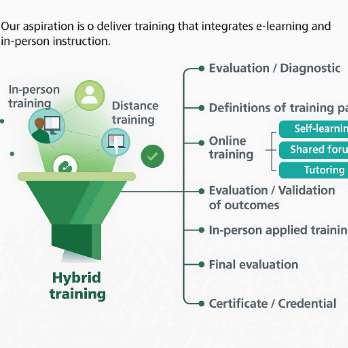
The hybrid model integrates in-person and distance learning, using innovative practices tailored to adult education. It aims to build not only literacy skills, but also learner autonomy and lifelong learning motivation.
Each training program is structured to build targeted competencies—ranging from group facilitation and project management to instructional design, digital tool usage, monitoring and evaluation, and personalized learner support.
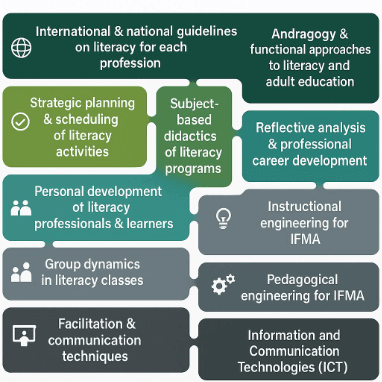
The training pathway includes assessment tools, online support, and hands-on practice—ensuring that individual needs are met while maintaining academic standards. This structure addresses individual learner needs while upholding rigorous educational standards, as detailed below:
IFMA ultimately seeks to improve the quality of literacy services by professionalizing the workforce. Its core goals include:
- Enhancing the skills and qualifications of literacy professionals;
- Improving the performance of practitioners delivering literacy programs;
- Strengthening professional competencies across the sector;
- Ensuring training quality and balanced territorial distribution of professionals.
Training is divided into initial and continuing education modules tailored to each professional role. This promotes interdisciplinary learning, combining technical expertise with soft skills, based on the following thematic areas: